Research operations
Cutting research recruitment from 7–10 days to 1–3 with an in-house panel
A proprietary panel of 200 finance professionals, built in Salesforce. Over two years it supplied participants for 20+ studies across Product, Marketing and Growth, cut time to recruit from 7–10 days to 1–3, and replaced external panels that cost ~€500 per participant with one where Candis paid only the incentive.
The situation
Candis makes invoice management software for finance teams at German SMBs. By 2023, recruiting those people through third-party panels cost around €500 per participant including the incentive, took 7–10 days, and was getting harder: providers struggled to find finance professionals who didn't already know Candis or hadn't done one of its studies. Candis wanted a working first version of its own panel quickly, with participants' data held in its own systems under its GDPR processes, not a vendor's. I was the Researcher responsible for UX, new product and growth research. I scoped the panel with the Head of Product and built it with our BI analyst.
What I decided
Build the panel in the CRM, not in a panel tool. A dedicated research-panel tool would have been the obvious purchase. I chose Salesforce, which Candis already ran. Participant data stayed in our own database under processes the company already used for GDPR, and BI and Sales saw the same records as Research, so a panellist who was also a customer or an open deal was visible to anyone who might contact them. I defined the record: contact and role details, company and company size, the finance tools they already used, product tier for customers, last-contacted date and participation history. The last two fields mattered most, because they're what stopped us asking the same people every time.
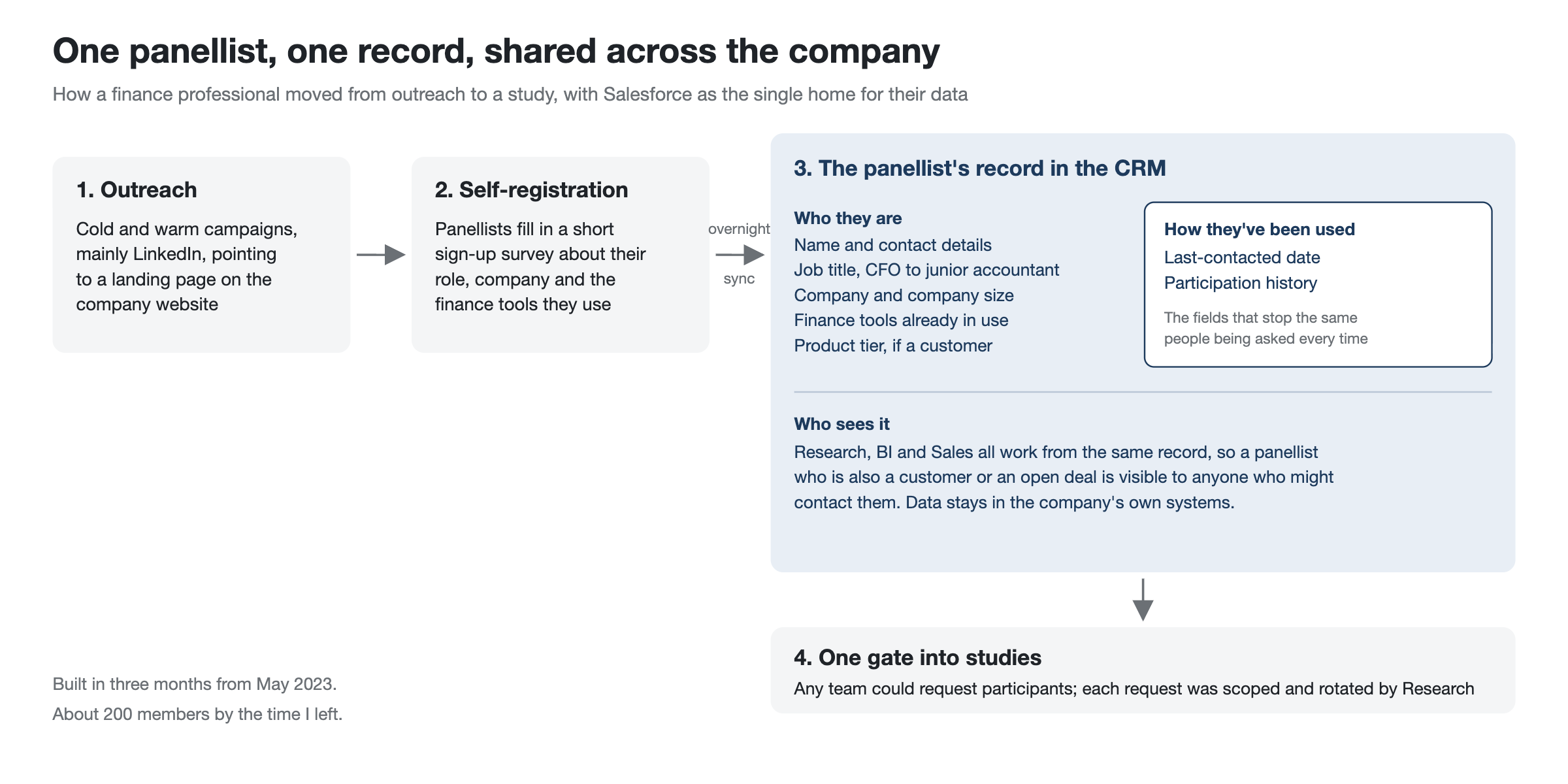
Put sign-up in a form people would finish. Salesforce's own web forms would have written straight to the CRM, but they aren't user-friendly. Typeform was, and Candis already used it, so panellists registered there and their answers synced to Salesforce overnight. The form sat behind a landing page on the company website; I wrote its positioning, copy and FAQs so the same page worked for cold outreach to non-customers and warm invitations to customers. Incentives depended on the participant's time and effort, and panellists could donate theirs to a non-profit organisation instead.
Open the panel to the whole company, through one gate. Keeping the panel for my own team would have protected panellists, and open self-service would have worn them out. I made it available to anyone at Candis who needed participants, but every request came through me: I checked that the study was properly scoped and chose panellists who fit the study and hadn't been asked recently.
Where it was harder than planned. Setting up the panel took two months, but running it never stopped. Acquiring in a niche audience, keeping members engaged, handling non-response and fatigue, and keeping records current turned out to be a job in its own right, and at first I did it alongside my research work. Acquisition slowed while I searched for the one channel that worked, LinkedIn outreach through an automation tool, and members' records went stale unnoticed. I made the case for dedicated capacity, got sign-off, and hired and managed a paid intern for six months to run acquisition through that channel. Since then I've planned panel upkeep as ongoing work from the start, not as a one-off build.
Time, depth, team
Two months to set up, from May 2023, in parallel to managing and conducting research studies with the teams, then ongoing recruitment until I left in September 2025. 200 members, from CFOs and Heads of Finance to junior accountants. Me: panel design, data model, sign-up flow, landing page, recruitment strategy and gatekeeping, plus hiring and managing the intern. Head of Product: scoping. BI analyst (Salesforce admin): implementation.
What the organisation did with it
- Recruitment dropped from 7–10 days to 1–3. Studies that had paid external panels ~€500 per participant, fee and incentive together, recruited from the panel instead and paid only the incentive.
- 20+ studies ran on it across Product, Marketing and Growth. They included the T&E validation that shaped the 2025 roadmap, landing-page concept tests, positioning work, and finance surveys for marketing content.
- Research operations got its own budget line, in the form of a paid six-month internship to run the panel.
What I'd do differently. The panel removed the external fee, but it wasn't free to run: it cost the intern's time, the BI analyst's and mine, plus the outreach tool's fee. I never added that up per participant, so this page claims no saving. Nor did it fix everything: non-customers who didn't know Candis stayed the slowest group to recruit, and for the T&E study I found only three. Next time I'd track full cost per participant from the first month, alongside the panel's health (share of non-customers, response rate, time since each member was last contacted), and make the case for a permanent research operations role, rather than an internship.
← All case studies Next: Win-loss research →